
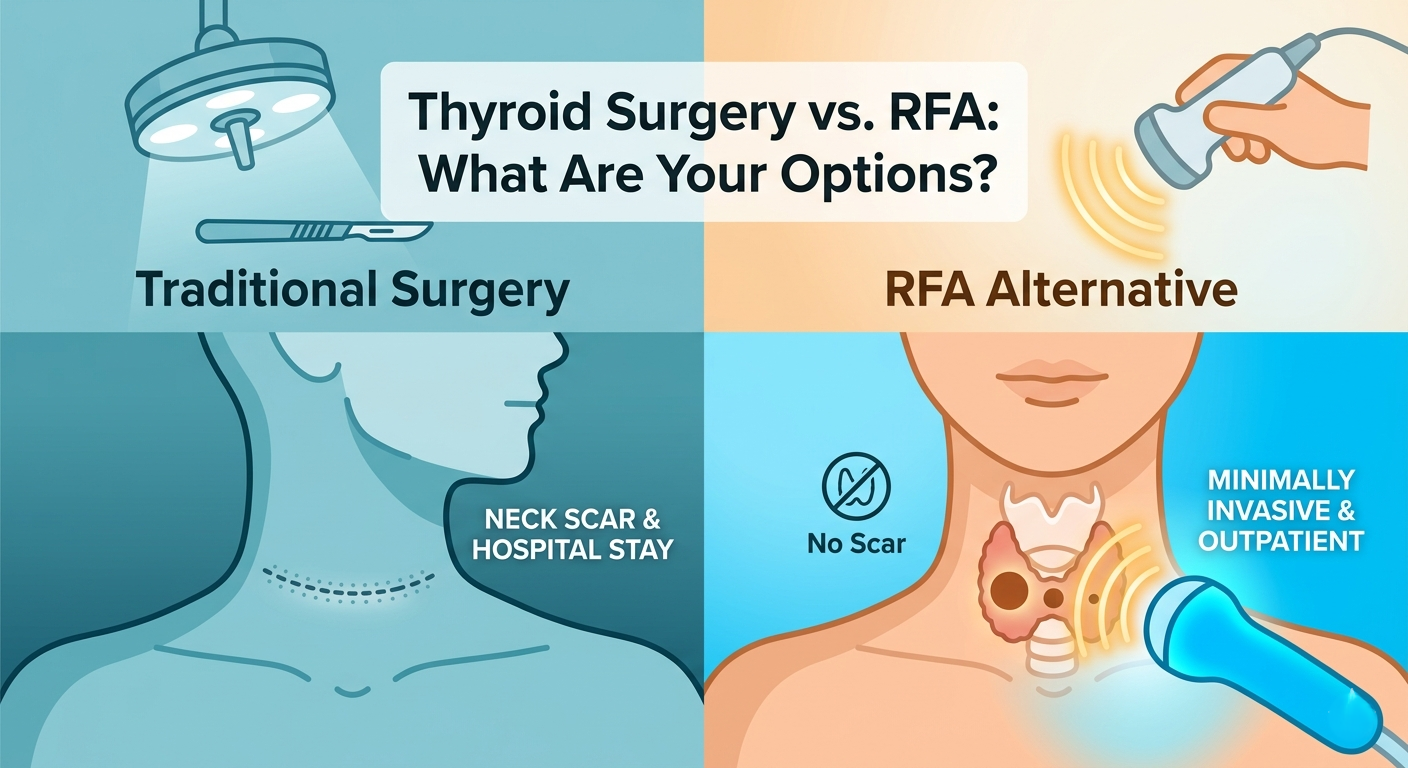
Thyroid nodules are extremely common. In fact, by age 60, more than half of adults will have at least one thyroid nodule visible on ultrasound. Most are harmless. Many never cause symptoms. But some grow large enough to create pressure, swallowing problems, cosmetic concerns, or suspicion for cancer. That is when surgery enters the conversation.
The problem is this. Many patients are told surgery is the only option when that is no longer true in every case.
As an endocrinologist treating patients throughout Port St. Lucie, Stuart, Jupiter, Vero Beach, Palm City, and the Treasure Coast, I spend a significant amount of time evaluating thyroid nodules and helping patients avoid unnecessary thyroid removal whenever possible. In selected patients with a single benign large thyroid nodule, Radiofrequency Ablation or RFA can dramatically shrink the nodule and eliminate the need for surgery altogether.
Before discussing RFA, it is important to understand what thyroid surgery involves, when it is necessary, and what risks patients should know about before making a decision.
What Is a Thyroid Nodule
A thyroid nodule is an abnormal growth within the thyroid gland. Some are solid. Others are cystic or mixed. Most are discovered incidentally during imaging studies done for unrelated reasons.
Common causes include:
Benign colloid nodules
Thyroid cysts
Hashimoto related inflammatory nodules
Follicular adenomas
Multinodular goiter
Thyroid cancer
Most thyroid nodules are benign. However, proper evaluation is critical because approximately 5 to 10 percent may represent malignancy depending on ultrasound characteristics and patient risk factors.
When Is Thyroid Surgery Recommended
Surgery is not automatically required for every thyroid nodule.
Indications for surgery generally include:
Confirmed or suspected thyroid cancer
Large nodules causing compression symptoms
Difficulty swallowing
Shortness of breath from tracheal compression
Voice changes
Substernal extension into the chest
Toxic nodules causing hyperthyroidism
Rapidly growing nodules
Cosmetic deformity
Indeterminate biopsy results with high risk molecular markers
The size of the nodule alone does not always mandate surgery. A large benign nodule without symptoms may simply be monitored. The key is careful ultrasound assessment, biopsy interpretation, symptom evaluation, and endocrine expertise.
Types of Thyroid Surgery
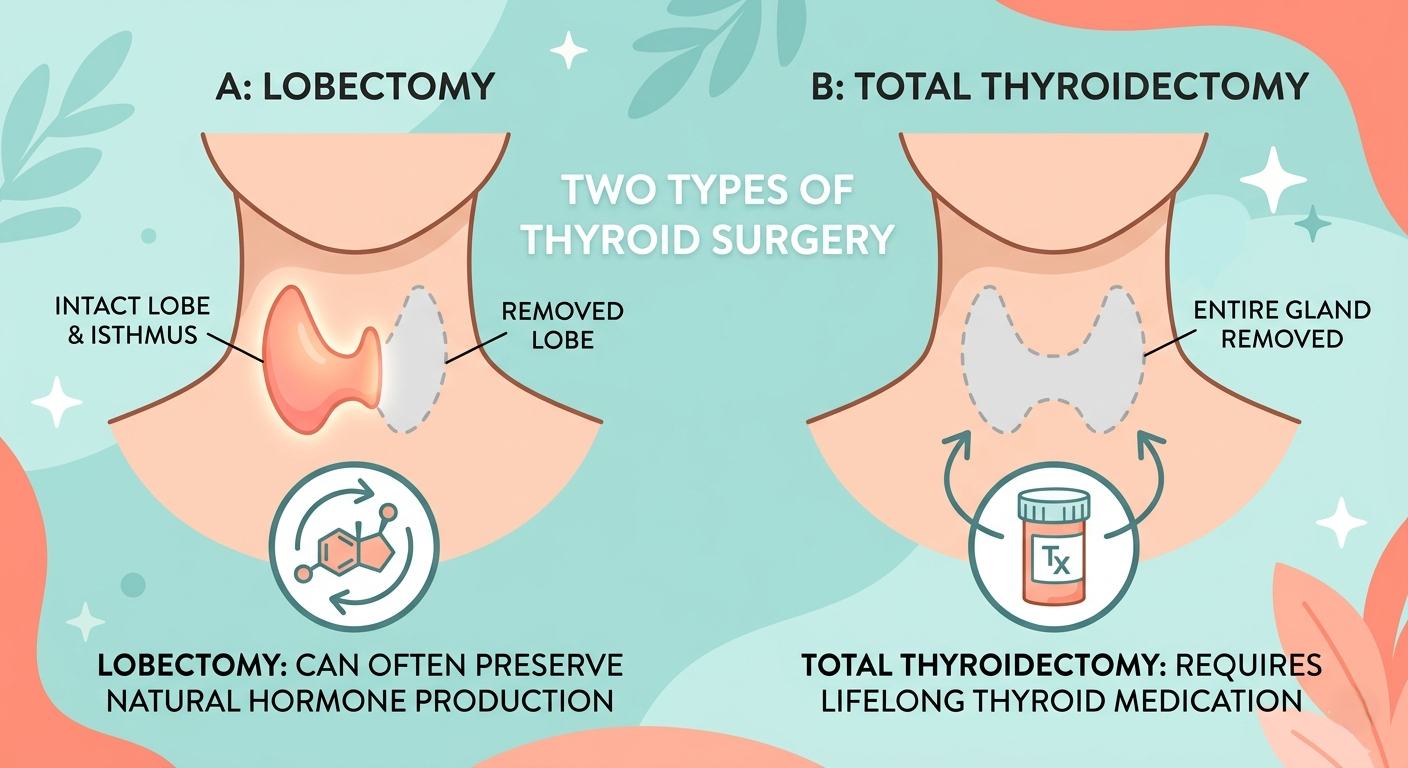
Lobectomy
A lobectomy removes one half of the thyroid gland. This is commonly done for:
Single suspicious nodules
Small thyroid cancers
Indeterminate nodules
Large unilateral nodules
One advantage is that some patients maintain normal thyroid hormone production afterward and avoid lifelong thyroid medication.
Total Thyroidectomy
This involves removal of the entire thyroid gland.
This is usually recommended for:
Larger thyroid cancers
Bilateral nodules
Aggressive cancer subtypes
Multinodular goiter affecting both sides
Graves disease in selected patients
Patients undergoing total thyroidectomy will require lifelong thyroid hormone replacement.
What Happens Before Surgery
Proper thyroid surgery planning includes:
Detailed thyroid ultrasound
Fine needle aspiration biopsy
Possible molecular testing
Thyroid hormone testing
Vocal cord evaluation in some cases
Cross sectional imaging if there is compression or substernal extension
Patients should understand that not all biopsies are black and white. Some results fall into an indeterminate category. This is where endocrine expertise becomes extremely important because overtreatment is common.
Recovery After Thyroid Surgery
Most thyroid surgeries are performed under general anesthesia and many patients go home the same day or after one night in the hospital.
Typical recovery includes:
Neck soreness
Swallowing discomfort
Fatigue
Temporary voice weakness
Scar healing
Most patients return to normal activity within one to two weeks.
However, surgery is not minor just because it is common. Thyroid surgery occurs in a small area packed with critical nerves, blood vessels, and parathyroid glands.
Patients deserve a full understanding of potential complications.
Complications of Thyroid Surgery
Recurrent Laryngeal Nerve Injury
The recurrent laryngeal nerves control the vocal cords.
Injury may cause:
Hoarseness
Weak voice
Difficulty projecting voice
Breathing problems in severe bilateral injury
Temporary nerve dysfunction is more common than permanent injury, but permanent damage can occur even in experienced hands.
This is particularly important for teachers, singers, public speakers, sales professionals, and content creators.
Hypocalcemia and Parathyroid Damage
The parathyroid glands sit directly behind the thyroid and regulate calcium balance.
During thyroidectomy, these glands may become damaged or lose blood supply.
Symptoms may include:
Numbness
Tingling
Muscle cramps
Tetany
Low calcium emergencies in severe cases
Temporary hypocalcemia is relatively common after total thyroidectomy. Permanent hypoparathyroidism is less common but life altering.
Bleeding and Hematoma
Bleeding after thyroid surgery is uncommon but potentially dangerous because swelling in the neck can compress the airway.
This is why close monitoring immediately after surgery is essential.
Infection
Infection rates are low because thyroid surgery is considered a clean surgical procedure. However, infections can still occur.
Lifelong Thyroid Hormone Dependence
After total thyroidectomy, patients require lifelong levothyroxine therapy.
Even after lobectomy, some patients eventually develop hypothyroidism and require replacement.
Dose adjustments can be frustrating, especially in patients sensitive to hormone fluctuations.
Can Surgery Be Avoided
In many cases, yes.
This is where Radiofrequency Ablation has changed the field dramatically.
What Is Radiofrequency Ablation or RFA
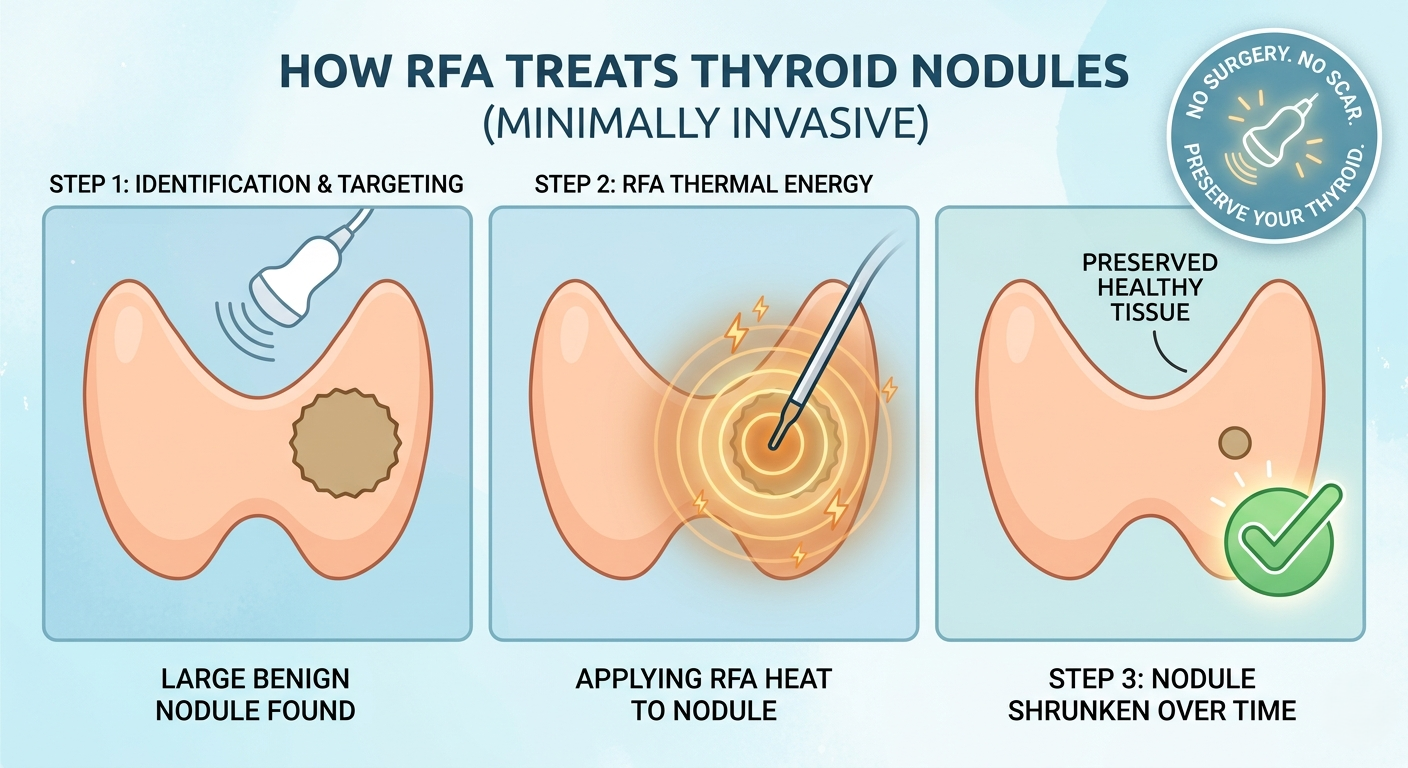
RFA is a minimally invasive procedure used to treat benign thyroid nodules without removing the thyroid gland.
A small probe is inserted into the nodule under ultrasound guidance. Thermal energy shrinks the tissue internally over time.
There is:
No surgical incision
No general anesthesia in most cases
No thyroid removal
Minimal downtime
Preservation of thyroid function
Patients typically return home the same day.
Who Is a Candidate for RFA
RFA is best suited for patients with:
Single benign thyroid nodules
Large nodules causing symptoms or cosmetic concerns
Growth over time
Pressure symptoms
Patients wishing to avoid surgery
The nodule must first be confirmed benign through biopsy.
RFA is not appropriate for every thyroid cancer case or every multinodular goiter.
Patient selection matters tremendously.
Advantages of RFA Over Surgery
Compared to surgery, RFA offers several potential benefits:
No neck scar
Lower risk of hypothyroidism
Lower risk of nerve injury
Lower risk of calcium complications
Faster recovery
Preservation of healthy thyroid tissue
Avoidance of hospitalization in many cases
Most nodules shrink significantly over several months after treatment. Many patients experience major improvement in pressure symptoms and cosmetic appearance.
Why Expertise Matters
Thyroid nodule management is not just about removing tissue. It is about avoiding unnecessary procedures while still identifying dangerous disease early.
Unfortunately, many patients are referred directly to surgery without hearing about alternatives like RFA.
As one of the physicians performing and specializing in thyroid Radiofrequency Ablation in the Treasure Coast region, Dr. Ahmet Ergin MD provides advanced thyroid nodule evaluation and minimally invasive treatment options for patients throughout Port St. Lucie, Stuart, Jupiter, Palm City, and Vero Beach.
The goal is simple. Preserve thyroid function whenever safely possible and avoid unnecessary surgery in properly selected patients.
Final Thoughts
Thyroid surgery remains an important and sometimes lifesaving procedure. When cancer is present or symptoms are severe, surgery may absolutely be the correct choice.
But benign thyroid nodules should not automatically lead to thyroid removal.
Patients deserve a complete evaluation, proper endocrine expertise, and discussion of all available options including Radiofrequency Ablation.
If you have been told you need thyroid surgery for a benign large thyroid nodule, it may be worth getting evaluated for RFA before committing to permanent thyroid removal.
- Location: 1400 Goldtree Dr STE 103, Port St. Lucie, FL 34952
- Call today at 772-398-7814 to schedule your consultation with Dr. Ahmet Ergin.